preloader
  • +91 70666 89634
  • info@rajpt.in

Post Tensioning – Bridges

Bridges

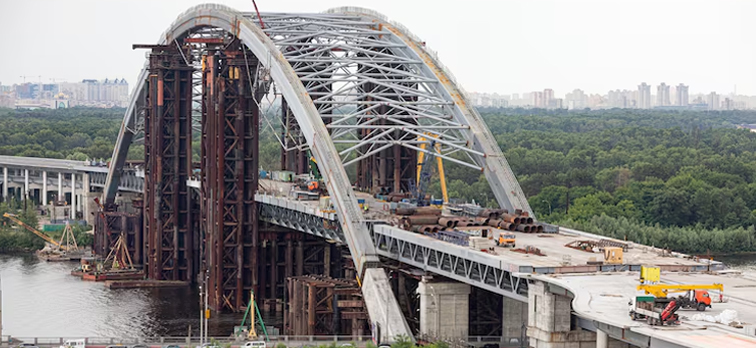
Our Post Tensioning - Bridges service offers specialized solutions for the design and execution of post-tensioning systems in bridge structures. We understand the unique challenges and requirements associated with bridge construction, and we provide innovative and efficient solutions to enhance the strength, durability, and performance of bridge projects.

Our team of experienced engineers and technicians collaborates closely with clients, architects, and contractors to develop customized post-tensioning designs tailored to the specific bridge project. We consider factors such as load capacity, span length, bridge type, and environmental conditions to optimize the structural performance and ensure long-term reliability.

During the execution phase, our skilled professionals meticulously install and tension the post-tensioning tendons, carefully following the design specifications. The post-tensioning process introduces compressive forces into the bridge elements, effectively countering the tensile stresses that arise from various loads, such as traffic, temperature fluctuations, and shrinkage.

Our expertise extends to different types of bridges, including precast segmental bridges, cable-stayed bridges, suspension bridges, and reinforced concrete bridges. We are well-versed in the latest industry standards, codes, and best practices, ensuring compliance and the highest level of quality in our post-tensioning systems.

Services

Solid slab bridges are a type of bridge structure that consists of a solid, continuous slab deck supported by abutments or piers. This bridge design provides a simple and cost-effective solution for spanning short to medium distances. The solid slab deck is typically made of reinforced concrete and provides excellent durability and load-carrying capacity. Solid slab bridges are commonly used for road and pedestrian crossings, culverts, and small waterway bridges. With their straightforward construction and reliable performance, solid slab bridges are a popular choice for various transportation infrastructure projects.

Hollow slab bridges are a type of bridge structure that utilizes precast or cast-in-place hollow slab elements for the deck. These hollow slabs feature voids or pockets within their cross-section, which reduce the overall weight of the bridge while maintaining structural integrity. The voids can be either regular or irregular in shape, and they help to optimize the use of materials and improve the bridge's load-carrying capacity. Hollow slab bridges are known for their efficiency in construction, as the precast elements can be quickly assembled on-site. These bridges are commonly used for medium to long spans, providing a cost-effective and durable solution for various transportation infrastructure projects.

Tee-beam bridges are a type of bridge structure that features a cross-section resembling the shape of the letter "T." These bridges consist of a solid beam, known as the stem or web, with a horizontal top flange on one side and a horizontal bottom flange on the other. The stem of the tee-beam acts as the main load-bearing component, while the flanges provide additional strength and stability. Tee-beam bridges are often constructed using precast or cast-in-place concrete elements and are known for their simplicity in design and construction. These bridges are commonly used for short to medium spans, providing a cost-effective solution for various road and highway crossings.

Box girder bridges are a type of bridge structure that features a hollow, rectangular or box-shaped girder as its main load-bearing component. The box girder consists of a top slab, a bottom slab, and vertical walls, creating a closed box-like structure. This design provides excellent stiffness and strength, allowing for efficient load distribution and structural stability. Box girder bridges are commonly used for medium to long spans and can be constructed using precast segments or cast-in-place concrete. These bridges are ideal for highway and railway crossings, offering enhanced structural performance, durability, and aesthetic appeal. The box girder design allows for flexibility in accommodating various superstructures and deck configurations, making it a versatile choice for a wide range of bridge projects.

Trapezoidal box girder bridges are a specific type of box girder bridge that features a trapezoidal-shaped cross-section for the main load-bearing girder. The trapezoidal box girder design offers several advantages, including increased structural efficiency, improved load-carrying capacity, and enhanced resistance to torsional forces. The trapezoidal shape allows for a wider top flange, providing better deck support and increased stiffness. These bridges are commonly used for medium to long spans and can be constructed using precast segments or cast-in-place concrete. Trapezoidal box girder bridges are widely utilized in highway and railway projects, offering a balance between structural performance, construction efficiency, and aesthetic appeal.